
WhatsApp orders into your system, not someone's phone
WhatsApp ordering for wholesalers, without the retyping
Your customers already message orders on WhatsApp. We set up the WhatsApp Business API so those orders arrive in your portal as draft sales orders, checked against stock and price lists.
In short: WhatsApp ordering for wholesalers works best on the WhatsApp Business Platform (the API), not the free Business app. Customers reorder with buttons or type an order as usual. The order lands in your ordering system as a draft, checked against their prices and your stock, and a person approves anything unclear. Meta charges per template message delivered, at rates that vary by country.
We set this up on top of a trade ordering system, either one we build or the one you already run. Our own trade portal already runs sales and warehousing every day for a wholesaler. WhatsApp ordering is something we build and add; it isn't part of that live system.
Ordering inside WhatsApp
Ordering inside WhatsApp is not a new idea, and Meta has been building for it. At its 2023 Conversations event in Mumbai it launched Flows, so people can do things like order a meal without leaving the chat, and in-chat carts with payment for customers in India (Meta announcement). Large UK wholesalers have worked on WhatsApp reordering too (see the UK section below).
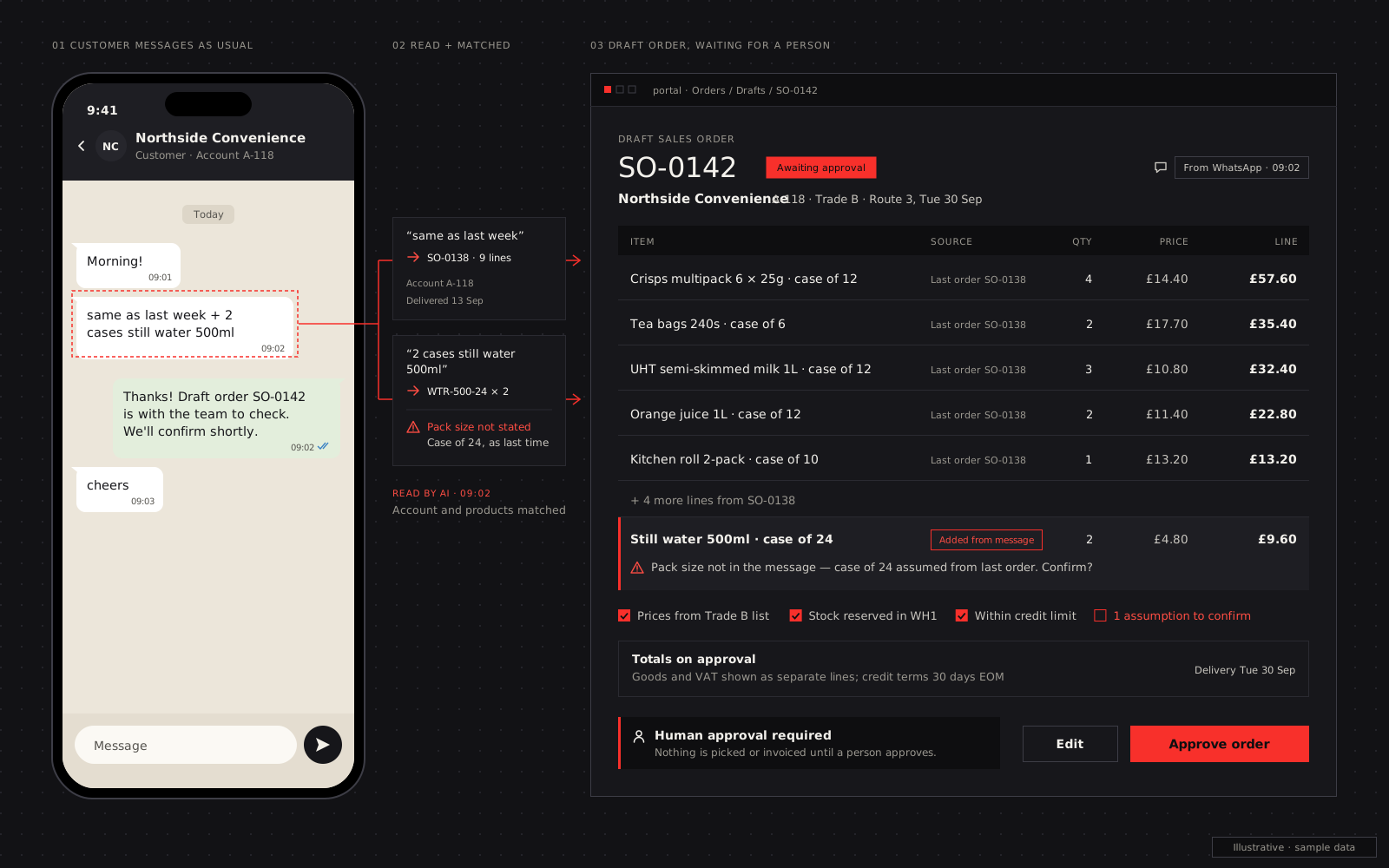
The problem for most wholesalers isn't getting orders on WhatsApp. It's that they arrive on one person's phone as photos, voice notes and "same as last week", and someone types them into the system later.
WhatsApp Business app vs the Business API
| WhatsApp Business app | WhatsApp Business Platform (API) | |
|---|---|---|
| Cost | Free | Charged per template message delivered |
| Where it runs | A phone, plus linked devices | Your software, through Meta's Cloud API or a provider |
| Orders into your system | No; someone retypes them | Yes, automatically |
| Reorder buttons and lists | Limited | Yes |
| Several staff on one number | Limited | Yes, through your own inbox |
| Reminders and dispatch updates | Sent by hand | Sent automatically from templates |
A small wholesaler with twenty accounts can manage on the app. Once orders need to reach a warehouse without anyone copying them out, you need the API.
What it costs to run
Meta moved to per-message pricing on 1 July 2025 (Meta's pricing docs). In short:
- You pay when Meta delivers a template message: a message you start, such as a reorder reminder or dispatch update.
- Templates fall into marketing, utility and authentication. Meta says rates depend on the category and on the country calling code of the customer's number, so check the rate card for each market you sell into. Meta also offers lower utility and authentication rates at higher volumes.
- When a customer messages you, a 24-hour customer service window opens. Your replies in that window are free, and utility templates sent inside it are free too.
For a wholesaler, most traffic is customers messaging orders in and your replies, so running costs depend mostly on how many reminders and promotions you send out. Order confirmations and dispatch updates are the kind of messages Meta treats as utility. A reorder reminder may count as marketing. Meta reviews every template and sets its category, so we plan the message list with that in mind and keep promotions separate.
What a WhatsApp order flow looks like
Here's the flow we'd set up for a typical trade customer:
- Reminder. On their usual ordering day, the customer gets a template: "Ready to reorder? Tap to repeat last week's order."
- Order. They tap to repeat it, pick from a short product list, or just type: "2 cases cola, 1 crisps mixed, same milk".
- Draft. The message becomes a draft sales order in your portal, priced from their price list and checked against stock in the right warehouse.
- Check. Anything unclear, such as an unknown product, a missing quantity or an account over its credit limit, goes to a person on your team.
- Confirm. The customer gets the confirmed order with totals in the same chat.
- Invoice and dispatch. The invoice goes through your accounting system, and a dispatch update follows when the order leaves.
For free-text orders, photos of order sheets and voice notes, the reading step uses AI order processing. The customer doesn't have to change how they write.
Rules to get right first
Opt-in. WhatsApp's Business Messaging Policy says you may only contact people who have given you their number and opted in to receive messages from you. We add a dated opt-in to trade-account sign-up and an opt-out in the portal.
Prohibited goods, everywhere. The same policy prohibits using WhatsApp for Business to buy, sell, promote or facilitate the exchange of certain goods, including alcohol and tobacco. It lists country exceptions for alcohol, gambling and over-the-counter medicines, but none for tobacco. So wherever you trade, vape and tobacco orders don't belong on WhatsApp; keep them on your portal and rep app.
Data. Order history lives in your system, not on a staff member's phone. We host in the region you need, and your data exports to CSV any time.
Order bot, AI inbox or both?
| WhatsApp order bot | AI order inbox | |
|---|---|---|
| Handles | Buttons, lists, repeat orders | Free text, photos, voice notes |
| Accuracy | Exact, because the customer picks | Good on clear messages; a person checks anything uncertain |
| Best for | Regular reorders | Customers who won't change habits |
| Setup | Product lists and templates | Product matching trained on your catalogue |
A sensible order is reorder buttons for your regulars first, then the AI inbox for everyone else.
If you're in the UK
UK wholesale has been moving this way for a while. In 2023 Better Retailing reported that b2b.store was working with Bestway, Parfetts and Filshill to bring promotions and ordering onto WhatsApp, with a button to repeat a previous order, and that around half of shops receiving promotions on WhatsApp read them within the hour (Better Retailing).
Meta's pricing docs list a higher UK marketing message rate from 1 July 2026, so reorder reminders classed as marketing cost more than they did. If you sell vaping products, see our vape wholesale software page for the alternatives, or the UK wholesale ordering page for everything else.
Who builds it, and how
Coded Idea is a software company, founded in 2020, with a development team in India. We've delivered 500+ projects, including automation and integration work through official APIs.
The project follows our usual route: a 20-minute walkthrough of how WhatsApp orders reach you today, a fit check of products, customers and price lists, set-up to a fixed plan, then training and close support while real orders flow. You get a fixed quote after the walkthrough, with the full cost known before work starts. Meta's message charges are separate and billed by Meta or your provider. What moves our quote: whether you already have a portal, how many templates and product lists, and whether you want AI reading free text.
If you'd rather customers ordered on the web, start with a B2B ordering portal and add WhatsApp later.
Book a 20-minute walkthrough. Forward us a screenshot of a WhatsApp order you had to retype this week, with names removed.