
Guide · Vaping Products Duty
Vaping Products Duty: what UK wholesalers need to do from 1 October 2026
On this page8 sections
Short answer: from 1 October 2026 every vaping liquid made in or imported into the UK carries a duty of £2.20 per 10ml and must have a vaping duty stamp on its retail pack. If you only buy and sell duty-paid stock, you don't need HMRC approval, but you do need to check stamps when stock arrives, sell any old unstamped stock by 31 March 2027, and keep six years of records that prove where every product came from.
This guide is written for wholesalers, distributors and cash-and-carry businesses. It covers what changes, the maths on your price list, and what your ordering and stock system has to be able to do. Everything below is based on HMRC guidance last updated in August 2026; links are at the end.
Who needs to do what
| You… | HMRC approval needed? | What changes for you |
|---|---|---|
| Only buy and sell duty-paid products (most wholesalers) | No | Check stamps on new stock, run down unstamped stock by 31 March 2027, keep records |
| Also import vaping products | Yes | Pay duty on arrival (unless goods enter duty suspension) and stamp products |
| Manufacture or fill e-liquid in the UK | Yes | Approval, duty returns, stamping, batch and stamp reconciliation |
| Store products under duty suspension (warehousekeeper) | Yes | Warehouse approval, movement records, quarterly counts |
| Act as UK representative for an overseas manufacturer | Yes | As a manufacturer |
If you do even one of the activities in rows 2–5, you're not "just a wholesaler" for duty purposes. HMRC's guidance says to check before you buy or sell stock under the new rules.
The key dates
| Date | What happens |
|---|---|
| Before 1 Oct 2026 | Stamped products could not be released onto the market, so most suppliers' first stamped stock arrives from October |
| 1 Oct 2026 | Duty starts. Everything made in or imported into the UK from this date needs a stamp |
| 1 Oct 2026 – 31 Mar 2027 | Grace period: you can keep selling unstamped stock produced or imported before 1 Oct 2026 |
| 30 Nov 2026 | Last day approved businesses can buy transitional (non-digital) stamps |
| 31 Dec 2026 | Last day transitional stamps can be applied |
| 1 Jan 2027 | Only digital stamps (with a scannable code) can be applied |
| 1 Apr 2027 | All vaping products outside duty suspension must carry a valid stamp. Holding or selling unstamped stock risks seizure, penalties and prosecution |
What the duty does to your price list
The duty is charged on liquid volume, not on price, so cheap high-volume lines take the biggest percentage hit. Whether you pass it on is, in HMRC's words, "a commercial decision", but you need to know the number per SKU before you decide.
| Product | Liquid | Duty | Duty + 20% VAT on it |
|---|---|---|---|
| 10ml nic salt or freebase bottle | 10ml | £2.20 | £2.64 |
| Single prefilled pod | 2ml | £0.44 | £0.53 |
| Pack of 4 × 2ml pods | 8ml | £1.76 | £2.11 |
| 50ml shortfill (0mg) | 50ml | £11.00 | £13.20 |
| 100ml shortfill (0mg) | 100ml | £22.00 | £26.40 |
The last column shows how much the retail price rises from duty alone once VAT is charged on the duty-inclusive price. On a 100ml shortfill that sold for £10–£15 before October, £26.40 of duty and VAT means it can't keep its old price, so expect demand to shift towards 10ml bottles and smaller formats. Plan your buying for that.
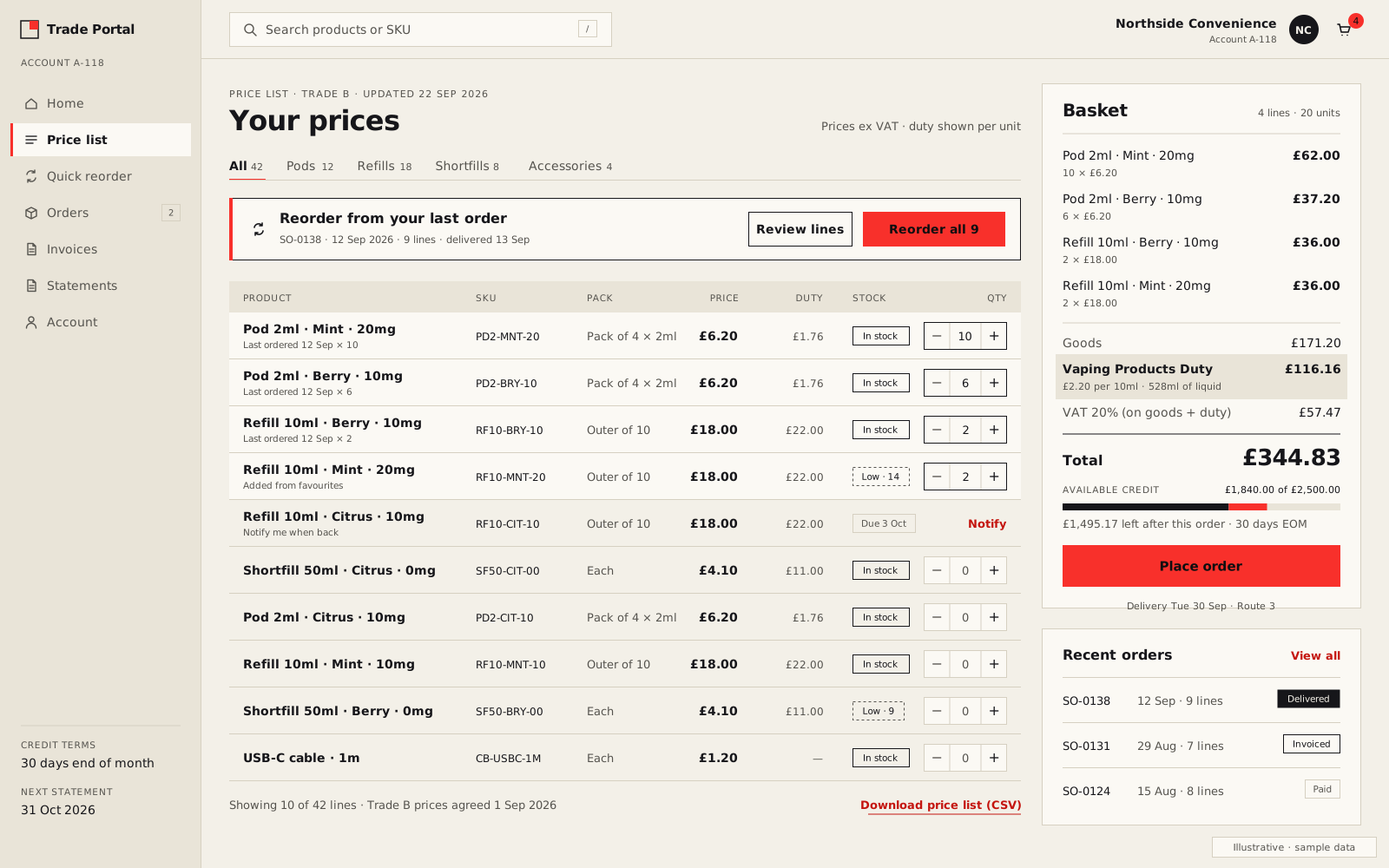
What to do: add a liquid-volume (ml) field to every SKU if you don't have one, calculate duty per unit, and show it as its own line on trade price lists and invoices so customers can see what's duty and what's your margin. In the trade portals we build for vape wholesalers, ml per SKU and a separate duty line on price lists and invoices are part of the standard set-up.
Checking stock when it arrives
From 1 October, HMRC expects you to check new stock before you buy or sell it. For each delivery, check:
- The product carries a vaping duty stamp where one is needed.
- The stamp is on the outermost retail packaging and seals it, so the pack can't be opened without damaging the stamp or the pack. Stamps are 42mm × 18mm rectangles and can't be re-used.
- Where the product came from.
- If it's unstamped, whether it was produced or imported before 1 October 2026, and what evidence proves it.
- Whether the supplier looks credible and can give you normal commercial paperwork: invoices and delivery notes.
If a stamp is missing, damaged, re-used, altered or on the wrong packaging, don't buy or sell the product until the supplier has explained it, and record the issue, their explanation and what you did. Suspected illicit or counterfeit stock can be reported to HMRC or local Trading Standards.
In practice this means a goods-in step that doesn't just count boxes. Someone has to mark each batch as stamped, unstamped (pre-October, evidenced) or quarantined, and the system has to stop quarantined stock being picked.
Running down unstamped stock before 31 March 2027
The grace period is 26 weeks. The simplest check for every unstamped SKU:
Weeks of cover = units in stock ÷ average units sold per week
If weeks of cover is more than the weeks left until 31 March 2027, you're holding stock you may not be able to sell legally. Example: 1,800 unstamped units of a pod line selling 45 a week is 40 weeks of cover. With 26 weeks left, around 630 units won't sell at the normal rate, so you either promote it now, return it to the supplier, or plan to deal with it lawfully (export or destroy) before April.
Two things make this easier:
- Pick unstamped stock first for any SKU where you hold both stamped and unstamped units.
- Review weekly, not in March. A line that looks fine in November can be a problem by February if sales drop after the price rise.
Watch the Tobacco and Vapes Act rules that start on 29 October 2026 as well. From that date it's an offence to sell a vaping product at a substantial discount, or give it away, where the purpose or effect is to promote it. DHSC's guidance says this doesn't affect normal discounting: unsold stock can still be reduced as part of normal business, and bulk and trade discounts may still apply. A clearance price on trade orders is fine; a "free pod with every order" style promotion is not. Our Tobacco and Vapes Act 2026 summary for wholesalers covers these rules in full.
The records HMRC expects you to keep
For at least six years, keep records showing:
- where each product came from: supplier name, address and contact details
- invoice numbers, delivery notes and dates received
- what you bought, held, supplied or sold, with SKU, volume and whether a stamp was present
- when the products were produced or imported (vital for unstamped stock in the grace period)
- the checks you made to satisfy yourself the products were legitimate
- what you did about anything unstamped, unclear or non-compliant, including seizures and suspected counterfeit stamps
Paper is allowed, but electronic records must be backed up and exportable in a readable format when HMRC asks. If your records live across spreadsheets, email and a till system, pulling six years of history for one SKU on request is going to hurt. That's the argument for keeping it in one system.
What your ordering and stock system should do
Use this as a checklist for whatever you run, whether that's ours, another platform or spreadsheets:
| Requirement | Why |
|---|---|
| Liquid volume (ml) on every SKU | Duty is £2.20 per 10ml; you can't price without it |
| Duty shown as a separate line on price lists and invoices | Customers can see duty vs margin |
| Stock split by stamped / unstamped / quarantined per batch | Grace period, and stops suspect stock being picked |
| Pick unstamped stock first | Run it down before 31 March 2027 |
| Weeks-of-cover report for unstamped SKUs | Spot problem lines early |
| Hard stop on selling unstamped stock from 1 April 2027 | Avoid seizure and penalties |
| Supplier due-diligence log attached to each delivery | HMRC asks what checks you made |
| Six-year history, exportable to CSV | HMRC's record format requirement |
| Trade-account checks on customers (company number, VAT) | Shows you supply the trade, not the public |
How we handle this: we build every item in this table into the trade portals we set up for vape wholesalers, or add them to the system you already run. Our trade portal already handles sales and warehousing day to day for a UK vape wholesaler. If you want to see how it handles stamp status and the grace period, book a 20-minute walkthrough.
Sources
- HMRC, Handling wholesale or retail vaping products in the UK (updated 30 September 2026)
- HMRC, Keeping records for Vaping Products Duty and the Vaping Duty Stamps Scheme (updated 30 September 2026)
- HMRC, One month until Vaping Products Duty and the Vaping Duty Stamps Scheme start
- HMRC, How to pay Vaping Products Duty
- DHSC, Selling vaping and nicotine products
Last reviewed 5 October 2026. This guide explains HMRC's published guidance for wholesalers. It isn't legal or tax advice. If you import, manufacture or store goods under duty suspension, read HMRC's full guidance or talk to a customs adviser.